Your Wardrobe Has a Values Problem — Here's How to Fix It
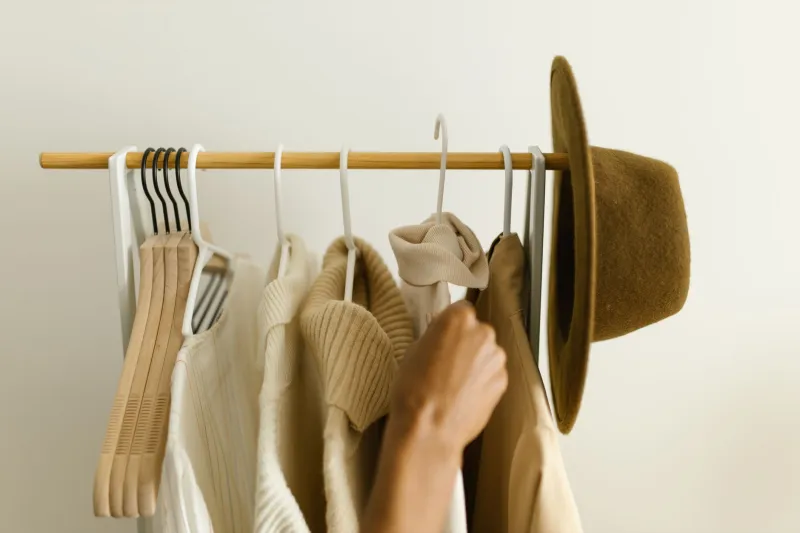
Here's an uncomfortable question: if someone went through your closet without knowing anything about you, what would they conclude about your values?
Not your taste. Not your budget. Your values.
Would they see someone who claims to care about the environment but has a drawer full of fast fashion hauls? Someone who says quality over quantity but keeps buying the same cheap basics every six months because they fall apart? Someone who talks about supporting small businesses but whose entire wardrobe is algorithmically recommended Amazon finds?
This isn't about guilt. It's about the gap — that quiet, persistent distance between the person we say we are and the choices we actually make when we're clicking "add to cart" at 11pm on a Tuesday.
The Gap Is More Common Than You Think
Most of us have one. The gap between stated values and actual purchasing behavior is practically a universal human experience, and the fashion industry is particularly good at exploiting it. Brands have become extraordinarily skilled at performing your values back to you — wrapping a $12 polyester blouse in language about empowerment, sustainability, and self-expression — so that buying it feels aligned even when it isn't.
The result is a closet that's a kind of collage of who you were trying to be at various moments, filtered through a lot of very good marketing.
So before we get to the practical stuff, let's just sit with that for a second. The closet you have right now is a record of decisions made under pressure — trend pressure, social pressure, the pressure of a sale ending in six hours. It is not a failure. It's data.
Running the Actual Audit
Forget the typical wardrobe audit questions like "does this spark joy?" or "have I worn this in a year?" Those are aesthetic questions. We're asking something different here.
Pull out your most recent ten purchases — or scroll your order history if that's easier — and ask yourself:
Where was this made, and do I know anything about how? You don't need to be a supply chain expert, but if you genuinely care about ethical production, this question matters. If the answer is consistently "I have no idea and I never checked," that's information.
How long do I actually expect this to last? Be honest. Not how long you hope it lasts — how long, given the fabric, the construction, the price point, it realistically will. If you're buying things you know will pill, shrink, or fall apart within a year, you're not buying quality. You're renting it.
Would I still want this if no one else could see it? This one stings a little. A lot of purchases are about visibility — about what they signal to other people. That's not inherently wrong, but if every purchase is driven by external perception, your wardrobe is performing an identity rather than reflecting one.
Did I actually need this, or did I need the feeling of buying it? Emotional shopping is real and it's not a character flaw — but if your closet is full of things bought during stress, boredom, or a dopamine dip, it's worth acknowledging that.
What Your Answers Are Actually Telling You
If you find a consistent pattern of buying things that contradict the values you say you hold, the answer isn't shame. It's curiosity.
Maybe you care about sustainability in theory, but the practical reality is that you're on a budget that makes ethical fashion genuinely inaccessible most of the time. That's real, and it's worth acknowledging rather than papering over with greenwashed marketing. The solution there isn't to beat yourself up — it's to buy less, make things last longer, and shop secondhand when possible.
Maybe you care about quality but keep getting seduced by lower price points in the moment. That's a planning problem as much as a values problem. Building a small "investment fund" for pieces you actually research and commit to can shift that pattern over time.
Maybe you've never actually articulated what you value in clothing beyond "I like it." That's fine — but it means your closet will always feel a little random, a little misaligned, because you haven't given yourself a filter.
Building a Values-Aligned Filter
Here's a simple framework that doesn't require you to overhaul everything overnight.
Name three things you actually care about when it comes to how you shop. Not what you think you should care about — what you actually do. Maybe it's longevity. Maybe it's supporting American-made brands. Maybe it's buying secondhand first. Maybe it's just buying less overall. Write them down.
Use those three things as a pre-purchase checklist. Before you buy something, run it through your own filter. Does this hold up? If yes, great. If not, pause for 48 hours and see if you still want it.
Audit your current closet through that same lens. Not to purge everything that doesn't pass — but to notice patterns. Where are you consistently out of alignment? That's where your habits need the most attention.
Forgive yourself for the past and focus on the next decision. You cannot undo a closet full of fast fashion by feeling bad about it. You can donate what you no longer wear, make what you have last as long as possible, and make different choices going forward.
The Closet That Tells the Truth
The goal here isn't a perfect wardrobe. It's a honest one.
A wardrobe that reflects what you actually believe — not what you aspire to believe, not what looks good in a flat lay, not what the algorithm told you to buy — is one of the quietest, most underrated forms of integrity.
And it turns out, when your closet starts telling the truth about who you are, getting dressed stops feeling like a performance and starts feeling like coming home.