The Capsule Wardrobe Lie Nobody Wants to Admit
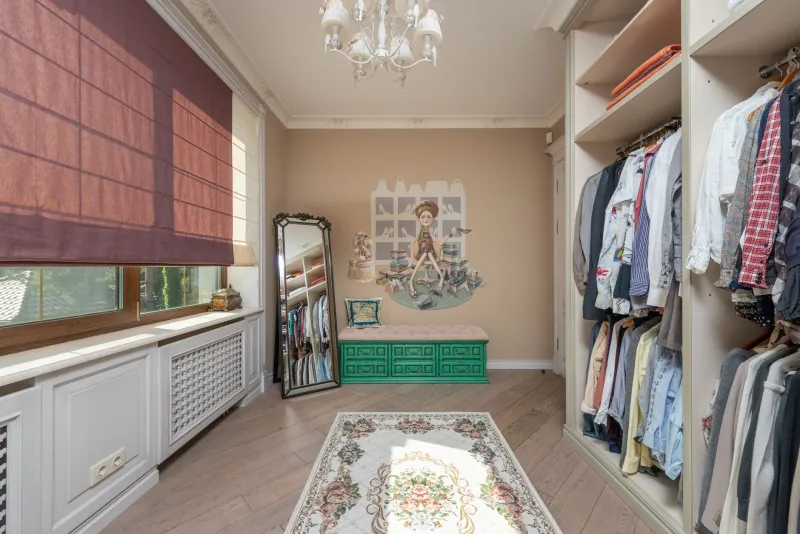
Somewhere between the tenth Pinterest board titled "33 Pieces, One Year" and the third YouTube video of someone dramatically folding ten identical white tees into a drawer, I started asking a question nobody seemed to want to answer: what if the capsule wardrobe ideal is actually setting most of us up to fail?
Before you close the tab — I'm not here to tell you to go buy more stuff. That's not the point. The point is that we've collectively accepted a very specific, very rigid system as the gold standard of intentional dressing, and for a huge portion of American women, it simply doesn't hold up in real life. Not because they lack discipline. Because the system itself has some serious design flaws.
Where the Capsule Dream Comes From (And Why It Sounds So Good)
The modern capsule wardrobe concept has roots in 1970s London — a boutique owner named Susie Faux coined the term to describe a core collection of quality basics that never go out of style. Donna Karan ran with it in the '80s. And then the internet got hold of it and turned a sensible framework into something closer to a lifestyle religion.
The appeal is real and completely understandable. We're all overwhelmed. Decision fatigue is genuine. The idea of opening a closet full of pieces that all work together, where getting dressed takes five minutes and every outfit looks intentional? That sounds like freedom. It sounds like the opposite of standing in front of a stuffed closet feeling like you have nothing to wear.
So we buy into it. Literally and figuratively.
The Part They Leave Out
Here's what the capsule wardrobe content rarely accounts for: your life is not a flat lay.
If you live in Chicago, your wardrobe needs to handle a 70-degree October afternoon and a brutal February commute in the same seasonal rotation. If you're in Miami, the "classic trench coat" that anchors half the capsule guides you see is basically a costume. If you're in a small town in the South where people actually dress up for Sunday church, a Friday night out, a Tuesday at the office, and a Saturday morning farmers market — those aren't the same outfit, and pretending they are is a form of denial.
And that's before we even get into life stage. A 28-year-old in a creative field in Brooklyn has genuinely different clothing needs than a 35-year-old mom in the suburbs of Atlanta who also works from home three days a week and travels for work once a month. The idea that one universal formula — usually somewhere between 30 and 37 pieces — can serve both of them equally is, when you say it out loud, a little absurd.
The Psychology of "Not Enough"
There's also a sneaky psychological side effect that the capsule wardrobe conversation tends to skip over: when you build a wardrobe around a rigid system and then find it doesn't fully work for your life, it's easy to conclude that you are the problem.
You didn't stick to the rules. You bought the "wrong" pieces. You don't have enough discipline. You're not minimalist enough. And so you either abandon the whole thing and go back to over-buying out of frustration, or you keep trying to force yourself into a framework that was never designed for your actual life in the first place.
Neither of those outcomes is the goal.
What a Flexible Foundation Actually Looks Like
The alternative isn't chaos. It's not "buy everything that sparks joy" or throwing intentionality out the window. It's something I've started thinking of as a flexible foundation — and the difference is subtle but significant.
A flexible foundation starts with the same instinct as a capsule: own things that work hard, buy with intention, prioritize quality over quantity. But it builds in room for your actual life rather than an idealized version of it.
Anchor pieces, not anchor numbers. Instead of targeting a specific count, identify the categories that your life genuinely requires. If you work in a formal office environment, you probably need more structured pieces than someone fully remote. If you're outdoorsy, technical layers aren't optional extras — they're core. Build from your real needs, not someone else's template.
Seasonal realism. If you live somewhere with four distinct seasons, your wardrobe is going to be larger than someone in Southern California — and that's fine. The goal isn't the smallest possible number. It's that everything you own earns its space.
The 20% flex zone. Here's a concept I genuinely believe in: give yourself intentional room for personality. Not every piece needs to be a "timeless classic." Trend pieces, statement items, the dress you bought because you loved it even though it only works for two occasions a year — these things make getting dressed feel like you. A wardrobe with zero flex is a wardrobe that starts to feel like a uniform, and eventually, a uniform starts to feel like a cage.
Function first, aesthetic second. The most beautiful capsule wardrobe in the world is useless if you're constantly reaching past it for the pieces that actually work for your Tuesday. Audit your most-worn items. Notice what they have in common. Build more of that, not more of what looks good in a flat lay.
The Question Worth Asking Instead
Rather than "does my wardrobe meet the capsule criteria," try asking: does my wardrobe meet my criteria?
Does getting dressed in the morning feel manageable or stressful? Do you have something appropriate — and something you actually want to wear — for the different contexts your life puts you in? Are you buying things and never wearing them, or are you wearing out the things you love?
Those answers tell you far more about whether your wardrobe is working than any piece count ever could.
Intentional Doesn't Mean Identical
The best-dressed people I know — and I mean that in the fullest sense, people who look consistently put-together and genuinely themselves — don't have identical closets. Some have 25 pieces, some have 80. What they share is that they know what they're doing and why. They've stopped buying things that don't serve them. They've gotten clear on their own style rather than borrowing someone else's formula.
That's the actual goal. Not a number. Not a specific ratio of basics to statement pieces. Not a color palette that photographs well.
A wardrobe that works for your life, reflects who you are, and makes getting dressed feel like the easy part of your morning — that's what intentional dressing actually looks like. And it doesn't need a rigid rulebook to get there.