Who Were You Dressing For? A Wardrobe Audit That Actually Gets Honest
There's a blazer hanging in the back of my closet. It's structured, expensive, and technically beautiful. I bought it at a time when I was convinced I was about to become the kind of person who wore structured blazers — someone who had important meetings, who looked like she had it together in a very specific, corporate-adjacent way.
I have worn it twice. Both times felt like a costume.
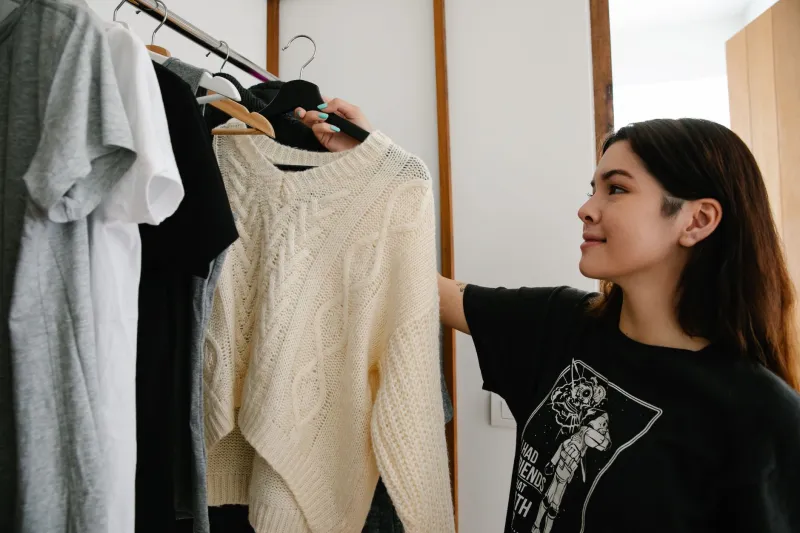
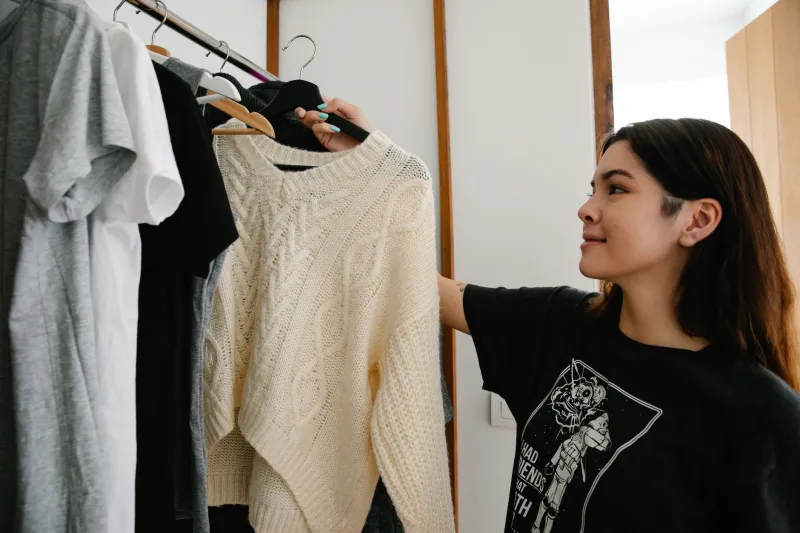
If you've ever stood in front of a full closet and felt like you had nothing to wear, I'd bet real money it's not because you don't have enough clothes. It's because a significant chunk of what's in there belongs to a version of you that doesn't actually exist — or at least doesn't exist yet, or maybe anymore. And those pieces aren't neutral. They take up physical space, mental energy, and a surprising amount of emotional real estate every single morning.
This is what I call the authenticity audit. And unlike the typical closet cleanout where you just ask "does this spark joy," this one goes a little deeper.
The Gap Between Aspirational and Actual
We all shop with two different people in mind: who we are right now, and who we imagine we might become. Neither instinct is wrong on its own. The problem is when the gap between those two people gets too wide, and we stop dressing for the life we're actually living.
Think about the last five pieces you bought that you've barely touched. What was the story you were telling yourself at the moment of purchase? Maybe it was I'm going to start going out more or I want to be someone who dresses more professionally or this is the kind of person I want to be seen as. Those aren't bad motivations — but if the real texture of your daily life doesn't support them, the clothes will just sit there, silently judging you.
The same thing happens in beauty. How many products are sitting on your shelf because a dermatologist on TikTok made them sound essential, or because a friend who has a completely different skin type swore by them? We absorb other people's routines and call them our own, and then wonder why our skin still feels off.
How to Actually Do This Audit
Set aside about an hour — not to reorganize, but to interrogate. Pull things out one at a time and ask yourself four specific questions:
1. When did I last wear this (or use this), and what was the occasion? If you can't remember, or if the occasion was genuinely rare, that's information. Not a death sentence for the piece, but data worth noting.
2. Does this fit my actual lifestyle, or the lifestyle I think I should have? Be ruthless here. If you work from home four days a week and your closet is full of office-ready separates you're constantly "saving for later," something's off. Your real life deserves real clothes.
3. Did I buy this because I loved it, or because I loved what it represented? There's a difference between buying a silk slip dress because you genuinely feel like yourself in it and buying one because you want to be the kind of woman who wears silk slip dresses. One will get worn. The other will haunt you.
4. Does this reflect a value I actually hold, or one I was performing? This one's a little more vulnerable, but it matters. Sometimes we buy things to signal something — to a partner, to a social circle, to a version of ourselves we're trying to impress. When the performance ends, the piece has nowhere to go.
The Beauty Shelf Gets the Same Treatment
Don't skip your skincare and makeup when you do this. The beauty industry is exceptionally good at selling us identities alongside products. The elaborate ten-step routine you assembled because it felt luxurious and intentional — does it actually fit into your mornings? Or does it sit mostly untouched while you reach for the three products you actually use?
This isn't about simplifying for simplicity's sake. It's about recognizing which products are genuinely serving your skin and your life, and which ones you're holding onto because you spent good money on them or because the routine felt like a personality trait you wanted to have.
Keep what works. Release what doesn't. Your bathroom counter will thank you, and honestly, so will your skin — because fewer products used consistently almost always outperforms more products used sporadically.
What to Do With What You Find
Once you've done the honest evaluation, you'll likely end up with three piles: things that genuinely belong to you right now, things that belong to a future version of you that's actually realistic and worth investing in, and things that belong to a version of you that was never really you to begin with.
The first pile stays. The second pile gets a hard look — if that future self is genuinely in progress, keep one or two pieces as intentional reminders. The third pile goes. Sell it, donate it, gift it to someone who will actually live in it.
And here's the thing about that third pile: letting it go isn't admitting defeat. It's not saying "I failed to become that person." It's saying I know who I actually am, and I'm choosing to dress her. That's not a small thing.
The Wardrobe That Feels Like You
When you clear out the pieces that were never really yours, something shifts. Getting dressed stops feeling like a negotiation with yourself. You stop standing in front of a full closet feeling empty. The things left behind are the ones that fit your body, your life, your actual aesthetic — not the mood board of someone you were auditioning to become.
Madison's whole thing has always been that style isn't about accumulating more — it's about curating better. And you can't curate authentically when half your closet belongs to a stranger.
So start there. Pull out the blazer. Ask the hard question. And then let yourself dress like the person you already are — because she's honestly pretty great, and she deserves a closet that knows it.