Fewer Products, Better Skin: The Minimalist Beauty Shift You're Already Seeing Everywhere
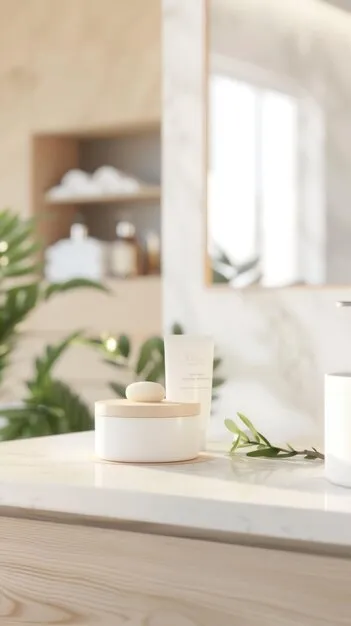
Photo: minimalist skincare products clean bathroom counter simple beauty routine, via img.freepik.com
For a while there, the skincare routine became a kind of performance. More steps meant more commitment. More commitment meant better skin. More products on your bathroom shelf meant you were serious about taking care of yourself. The 10-step Korean beauty routine went viral, the "shelfie" became a whole aesthetic, and somewhere along the way, a simple cleanser and moisturizer started to feel almost embarrassingly basic.
That era isn't completely over, but the tide is turning — and it's turning fast.
What's Actually Happening in Beauty Right Now
Data from market research firm Mintel found that consumer interest in skincare simplification has been rising steadily since 2022, with a notable jump among shoppers under 30. A 2023 survey from Circana (formerly NPD Group) noted that while prestige skincare overall saw growth, the fastest-growing segment was multi-use and high-efficiency products — things that do more with less.
On social media, the numbers back it up too. Search interest in terms like "skinimalism," "simplified skincare," and "skin cycling" (a method that rotates just a few active ingredients rather than layering a dozen products nightly) exploded on TikTok and Google throughout 2023 and into 2024. The videos getting the most traction aren't the ones with fifteen products lined up on a bathroom counter. They're the ones where someone holds up three or four things and explains why that's enough.
Gen Z, in particular, seems to be leading this shift — which is a little ironic, given that they came of age on beauty content that often celebrated maximalism. But that same generation also grew up watching people burn out their skin barriers, break out from product overload, and spend hundreds of dollars on routines that didn't actually deliver. They've absorbed those lessons.
Why the Overcomplicated Routine Stopped Making Sense
Here's the thing about a 10-step routine: it requires a level of knowledge most people don't have access to. Which ingredients conflict with each other? What order do actives go in? How many exfoliants are too many? When you're layering niacinamide, vitamin C, retinol, AHAs, BHAs, and peptides — all in the same routine — you're not just doing skincare. You're conducting a chemistry experiment on your face.
For a lot of people, that experiment backfired. Dermatologists have been vocal about seeing an uptick in patients with compromised skin barriers, irritation, and sensitivity that traces directly back to overcomplicated routines. Dr. Whitney Bowe, a board-certified dermatologist who has spoken on this widely, has noted that more products often means more potential for irritation, not better results.
Simplifying isn't giving up. In many cases, it's actually the smarter move.
What Intentional Minimalism Actually Looks Like
Minimalist beauty isn't about skipping steps because you're lazy or don't care about your skin. It's about being deliberate. It's understanding what your skin actually needs right now — not what a 47-product skincare influencer told you it needs — and building a routine around that.
For most people, a genuinely effective routine looks something like this:
Morning: A gentle cleanser (or just water if your skin is dry), a moisturizer with SPF. Done.
Evening: A cleanser, a targeted treatment (one — retinol, a niacinamide serum, whatever your skin actually needs), a moisturizer.
That's it. Four to five products total. And for the vast majority of skin types, that covers everything.
The shift is in the quality of those products, not the quantity. When you're not spending money on fifteen things, you can spend more on the ones that actually perform. A really good SPF moisturizer. A well-formulated retinoid. A cleanser that doesn't strip your skin. Those investments make sense in a way that a 47-product haul never quite did.
The Makeup Side of This Conversation
It's not just skincare. The same energy is showing up in the way people approach makeup. Heavy, full-coverage foundations are giving way to skin tints, tinted moisturizers, and the kind of "your skin but better" finish that requires a lot less product and a lot less time.
The "clean girl" aesthetic — yes, it's been discussed to death, but the underlying impulse is real — is essentially about looking effortlessly put together with minimal visible effort. A little concealer, a clean brow, maybe a lip balm with some color. It's not a lazy look. It's a confident one. It says: my skin is in good enough shape that I don't need to cover it up.
And that confidence, interestingly, comes from having a consistent, simple routine rather than a complicated one.
How to Start Editing Your Own Beauty Cabinet
If your bathroom shelf is starting to feel more like a Sephora stockroom than a personal care space, here's a low-pressure way to start simplifying.
Step one: Pull everything out. Look at what you actually use every day versus what's been sitting there since last winter.
Step two: Identify overlap. Do you have three different vitamin C serums? Two retinols? Four moisturizers? Pick the one you like best from each category and let the others go.
Step three: Look for multi-taskers. A tinted SPF replaces your moisturizer and your foundation. A balm cleanser can double as a makeup remover. The fewer single-purpose products you own, the cleaner your routine gets.
Step four: Give it a month. Simplified routines sometimes take a few weeks to show results — especially if your skin has been overwhelmed. Be patient with it.
The Bigger Picture
This shift toward intentional minimalism in beauty isn't really about products at all. It's about a broader cultural exhaust around optimization culture — the idea that more effort, more steps, more things will always lead to better outcomes. People are pushing back on that across the board, and beauty is just one of the places it's showing up most visibly.
There's something genuinely freeing about deciding that you don't need to do more. That a routine that takes five minutes is just as valid as one that takes forty-five. That your skin doesn't need to be a project.
Fewer products, more confidence, better mornings. Honestly? That sounds like an upgrade.